Troop Structure and Meetings
Scouts are expected to arrive on time, in full Class-A uniform, unless otherwise advised, with their Scout book, pen/pencil and paper. See "Uniforms" below for details. During the school year, meetings are held each week EXCEPT if the Monday falls on a holiday such as Memorial Day, Labor Day or Christmas. If a meeting is cancelled, members will be contacted via email and Facebook in a timely manner. During the summer, meeting will be announced at the end of the school year. Due to summer camp and high adventure, we will not have a meeting each week.
The meetings consist of patrol time, (for the patrols to organize and work on rank requirements), and troop time during which inter-patrol activities will take place at the direction of the Senior Patrol Leader. During meetings, we may also have merit badge classes, and Scouts may also meet with the Scoutmaster for Scoutmaster Conferences, (required for rank advancement). Finally, Boards of Review, (BOR), also required for rank advancement, take place during meetings. If your son has any needs for rank advancement or any other immediate questions, it is up to him to utilize his patrol chain of command to get the answer or assistance.
Attendance at meetings is required for rank advancement. Each rank has a requirement specifying that the Scout be "active" in the troop for a specified period of time. If the Scout has to be absent for meetings, they may not meet this requirement until they demonstrate more active involvement in the troop. If they are to be absent for a meeting, it is a good idea for them to let their Patrol Leader know that they cannot make it to the meeting.
Cell phones are not to be used during the meeting. They will placed on the front table for the duration of the meeting. If required for a specific Scout-related reason, the Scout can get permission from the Senior Patrol Leader (SPL).
Youth Structure
We are a boy-led troop.
The troop is led by the SPL. The SPL is generally an older Scout who has been elected by the Scouts in the troop to serve in this position. The SPL is responsible for planning meetings and is the "go-to" Scout for any issues which might crop up.
The SPL has an Assistant Senior Patrol Leaders (ASPL), also elected by the Scouts, who serve to assist him and fill in for him if he is absent. Additionally, there are a number of leadership positions in the troop, (i.e. Troop Quartermaster, Chaplain’s Aid, Troop Librarian).
These positions are filled at the direction of the SPL, and the Scouts in these positions report directly to the SPL regarding their areas of responsibility. The SPL reports directly to the Scoutmaster.
Patrols
All of the Scouts in the troop are assigned to a specific patrol. This assignment generally occurs when they first join, and a number of considerations are made when assigning a particular Scout to a specific patrol.
Each patrol typically has 5-7 members and is led by a Patrol Leader (PL). The Scouts who serve as PLs are elected by the Scouts. A PL is responsible for all aspects of Scouting for the members of his patrol. Specifically, he is responsible for helping his patrol members' advance in rank, communicating issues regarding troop activities, organizing the patrol for campouts, and teaching Scouting skills to the younger members of the patrol. Each PL reports directly to the SPL. Additionally, each PL will select a member of the patrol to serve as Assistant Patrol Leader. This Scout will assist the PL in any areas and will fill in for the PL in his absence.
Adult Structure
Scouting Leadership: The troop has a Scoutmaster (SM) who serves as the primary adult leader of the troop. His job is to serve as a guide for the troop and, specifically, for the SPL. He has select adults to serve as Assistant Scoutmasters (ASM). The ASMs help in any ways needed and can fill in if the SM is absent.
Troop Committee: The troop committee consists of BSA Registered adults (those adults who have registered with the BSA and have been assigned an official member ID). They serve as the organizing body for the troop. The committee is led by a chairperson who is selected by the members of the committee. Within the committee, there is also a secretary, treasurer, and coordinators for outdoor activities, advancement, training, equipment & supplies, good works, fundraising, and advancement, among others. Committee Meetings will be announced in advance. Parents are welcome and encouraged to attend any and all Committee Meetings.
Parent Involvement and Participation
Parents are always welcome to attend any of the weekly troop meetings as well as the troop Committee Meetings. We do kindly ask that you silence your cell phone and refrain from loud conversations during meetings as this can be distracting. We also ask that you only observe the meetings, the youth leaders are responsible for running them.
There are a number of ways you can be involved with the troop. Positions on the troop committee are open to all adults associated with the troop. You can also contribute by becoming a Merit Badge Counselor. There are many different Merit Badges available to the Scouts and you may have a particular skill, because of a hobby, profession, or area of expertise to share and teach the Scouts.
Adult volunteers are required to fill out an adult registration form (on line). If you want to attend campouts, you will be required to take the youth protection training.
All parents/legal guardians must conduct themselves at all times in such a manner as to be a positive role model for all Scouts. This includes the use of tobacco. While we cannot prohibit smoking, we do request that it be done responsibly. Please use designated smoking areas only and if outdoors, smokers are required to field strip and pack out any non-biodegradable components. Out of respect for BSA principles, we expect that no tobacco will be used in the presence of any Scout.
Alcohol is strictly prohibited during any and all Scout functions and events. Adult language and adult conversations will not be permitted within the hearing of any Scout.
Uniforms
All Scouts are required to have a uniform with the proper insignia and epaulets. Required patches include the troop number and North Florida Council insignia. Rank and Patrol patches will be supplied by the troop as will specific leadership position patches and other award insignia.
The only two patches that transfer over from Cub Scouts are The Arrow of Light (patch) and the Religious Knot. Some patches such as rank and patrol are changed out occasionally so instead of sewing those onto the Class-A uniform, we try to provide Velcro rounds specifically for clothing and we suggest you sew the Velcro onto the uniform then subsequently the patches themselves. Placement for all of the patches and insignia can be found on the inside cover of the Scout Handbook.
Scouts must wear their Class-A uniform to their Board of Review. Any Scout who requests a BOR and is not in his Class-A uniform will need to wait until the next meeting when he is wearing his full uniform. The troop keeps a limited number of used uniforms on hand. If interested your Scout should see the Scoutmaster to see what is available.
A Troop 312 Class B t-shirt will be provided to each Scout upon paying their initial troop dues.
The Class-A uniform includes:
Khaki/tan shirt with appropriate required insignia (required)
Olive green pants or shorts (optional)
Scout belt (optional)
Closed shoes such as sneakers or hiking boots (no Crocks)
Merit Badge sash (for formal Court of Honor events)
Scouts must wear their Class-A uniform to all meetings unless announced otherwise. Scouts can wear their Class-B t-shirt underneath the Class-A shirt so that they can remove the top shirt for outdoor activities.
The Class-B uniform includes:
The Class-B uniform consists of a Scouting specific t-shirt, shorts and/or pants and closed shoes. The t-shirt does not have to be from Troop 312. Any t-shirt with insignia or markings of the BSA will suffice. These should be worn on campouts, under the Class-A uniform, which is worn during transportation to a campout.
Insignia
North Florida Council Shoulder Patch
Unit Numerals: 3, 1, and 2 in olive green
Shoulder epaulets: olive green
World Crest Emblem (small, purple patch with a white fleur-de-lis in the center)
Patrol Patch (these are assigned by the Patrol Leader)
NOTE: Our troop does not require BSA hats or neckerchief. However, only BSA hats and/or baseball cap styles are permitted.
Adult Leader Uniforms (Adult Male & Female):
Same as your Scout!
Advancement
Rank
The highest rank in Scouting is the Eagle Scout. This is the goal of all Scouts, but only a select few will make it all the way. It requires hard work, persistence, dedication and focus. The reward for becoming an Eagle Scout is the lifetime mark of achievement that comes with this high honor. There are Six Scout ranks before EAGLE.
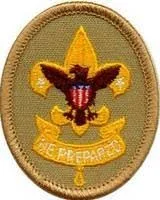
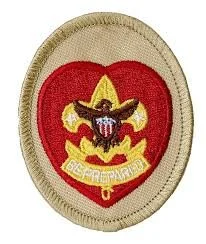
All Scouts start by earning their Scout badge. The requirements for this are simple and include understanding of the Scout Oath, Law, motto, slogan, and Outdoor Code. This should all be completed shortly after your son joins the troop. As your Scout learns and demonstrates new skills, he will become a Tenderfoot, followed by 2nd Class and 1st Class. The next rank is the Star Scout. Although Scouts can start earning merit badges at any time, this is the first rank which requires the Scout to earn merit badges. After Star comes Life Scout and then the Eagle Scout.
Merit Badges
Merit badges are earned through troop wide activities, at summer camp, or by the Scout himself through his own hard work. Each merit badge has a specific counselor within the troop. If a Scout wants to earn a particular merit badge, they are to obtain permission from the SM or an ASM. The Merit Badge Counselor Coordinator will provide the name of the Merit Badge Counselor. When the requirements for the merit badge are completed, the counselor will sign off on the Blue Card and a portion of this will be turned in to the Troop Advancement Coordinator. This is the only official record that the merit badge has been earned, and the Scout will get to keep a portion of the blue card for their records.
We are always in need of adult volunteers with skill sets and expertise in certain areas. With over 130 different merit badges we almost always can find a way for you to help out. Ask the Merit Badge Counselor Coordinator, SM or an ASM and they will make sure you receive all the information you need to become an official Merit Badge Counselor.
It is important to remember that advancing in rank is not a race. We want Scouts to advance at a pace that is appropriate for them. We would prefer to have Scouts master their skills rather than having them "advance" without any mastery.
Typically, we have a goal of each Scout becoming a 1st Class by the end of their first full year in the troop. It is the responsibility of the Scout's PL to make sure that the Scout is advancing at an appropriate pace.
Requirements up to 1st Class can be signed off by the Scout’s SPL, ASPL or any 1st Class or above Scout. Requirements can also be signed off by the SM or ASM.
After completing the requirements for a rank, the Scout will participate in a SM Conference and a Board of Review (BOR). These are not testing sessions or interrogations, but it is a chance for the adult leaders to see how a Scout is doing and to make sure that the program is being delivered as it should be.




Code of Conduct
All members of the Boy Scouts of America are expected to conduct themselves in accordance with the principles set forth in the Scout Oath and Law. Scouts are expected to behave in a manner that brings credit and honor to Troop 312 and ALL Boy Scouts. Physical violence, hazing, bullying, theft, verbal insults, and drugs and alcohol have no place in the Scouting program. Participation in the Boy Scouts of America is a privilege, which carries responsibilities of all involved in order to carry out our objectives. This policy is for ensuring the safety and enjoyment for all Scouts and scout leaders.
Failure to abide by the Troop's Standards, Rules and Code of Conduct will result in the following disciplinary actions:
The Scout will be given a verbal warning and counseled during the specific Troop function and/or Troop event during which the infraction occurred.
Second occurrence of any nature or at any time subsequent to the initial counseling will result in the Scout being asked to leave the Troop function and it will be the responsibility of the parents/legal guardians of the Scout to arrange transportation home as soon as possible. This is important so as not to interrupt the oversight of other Adult Leaders and the overall experience for the remainder of the Troop.
A Scout whose behavior has required him to leave a second function for a similar offence would be asked to leave the Troop.
Should the offender request another chance, it will be at the discretion of a "Troop Tribunal" and will require unanimous vote of all those participating to give the offender a final chance to improve his behavior and adherence to the principals of Scouting.
Additionally, Scouts are reminded that their behavior is at all times a reflection on their character as Scouts. Therefore, any Scout that has disciplinary action taken against them that results in any of the following will result in a "Troop Tribunal" hearing:
Any civil or criminal action for which charges are made and subsequently upheld.
Decisions of the "Troop Tribunal" upon concurrence of the Troop Committee are final and may not be appealed.
Troop 312 Standards and Rules
It is the mission of the Troop Committee, in the setting down of these standards to provide uniformity and safety for all of our Scouts in the most likely settings. While it is impossible to anticipate every circumstance that may present itself, we have attempted to address those that are most common. This is not intended to be all-inclusive but instead it is to provide a "guideline" that will assist the Scout and his parents. It should be understood, that these "Troop Standards" could be modified at any time when it is deemed necessary by the Troop Committee. This Troop Committee and all Adult Leaders agree to an open-door policy and ask that you please come to us with any questions or concerns that you feel have not been addressed, either here or in the Scout handbook.
General
All BSA guidelines will be adhered to during troop meetings, functions and transportation.
All Registered Adults must be "Youth Protection" trained. This is an online course available at no cost. It is encouraged that at least one parent for each Scout complete the training. To take Youth Protection training, go to MyScouting.org and create an account. When completed, print out the certificate and present it to one of the troop leaders. This certificate is valid for 1 years.
Only Registered Adults will be permitted to camp with the Scouts. Any Registered Adult who wishes to camp on a regular basis will be required to complete additional training.
There may be instances where some "Troop Activities/Functions" may be by invitation only. This could be based on Scout rank, age, ability, maturity level and/or other requirements stated for the activity.
Campouts
Camping
Campouts are typically Friday evening through Sunday morning. Transportation is provided by adult members of the troop. Unless otherwise advised, when traveling to campouts, ALL Scouts and adult leaders are required to wear their Class-A uniforms. We generally leave for campouts by 6 PM from Bucee’s parking lot. No dinner is served on Friday evening, so the Scout should provide their own meal to eat on the way, or they can eat prior to leaving for the campout. On return, the adults on the campout will have the Scouts contact parents from the Scout’s phone or the driver’s phone if the Scout has no phone, to let them know what time the Scouts will be arriving back at the departure point.
All campouts require the presence of at least two Adult Leaders. All adults attending campouts must have completed the BSA Youth Protection Course and the "2 deep" policy is followed at all times, (no adult will ever be alone with any Scout).
Cell phones or any electronic device can be use on the way to and from the campout but are collected for safe keeping by the adults once at the campsite.
Summer camp occurs each year. It lasts for one week (typically Saturday to Saturday) and is a great opportunity for the Scouts to earn merit badges and fulfill rank advancement requirements.
High Adventure camping is available for senior Scouts and is about 9 days depending on the particular adventure.
Camping is the signature activity of Scouting. We generally try to have a campout once per month during the school year. During these campouts, the Scouts will have the opportunity to learn outdoor skills, work on merit badges and rank advancement requirements. They will be responsible for setting up their tent with their tent mate, and each patrol will be responsible for preparing their own meals.
The Troop must have current and complete BSA Health Forms Parts A & B for your Scout in order for him to attend weekend campouts. These can be filled out by the parent / guardian. BSA Health Form Part C is required for longer campouts such as summer camps or high adventure, (lasting over 72 hrs.). Part C requires a physical check-up and can only be filled out by a medical professional. These forms MUST be completed each year if your Scout is to attend any long-term campout. The Troop also needs a copy of your medical insurance card. We cannot make any exceptions for this. Click Here for the form.
Registration and Troop Dues
There are two annual fees associated with Scouting. The first one is for the BSA Scouting membership. Payment is made direct to council or to the troop and we pay council office. The second is for Troop 312 membership.
In order to be an official member of BSA Scouting, each Scout must be registered through the North Florida Council, which is the local BSA council office. The fee is $145 for a year.
The dues for Troop 312 is $105 for a year. This money goes towards troop expenses such as badges, patches and equipment.
Scout Accounts (Savings)
Each Scout will have his own individual monetary "Scout Account" within the troop. Monies are added to the account mainly by the Scout's participation in troop fundraisers. Participation in popcorn sales is one such event. A percentage of the money raised will go into each Scout's account pro-rated on the amount of participation time at the event. The money in the account may be used for any kind of Scout related expense, such as dues, summer camp fees, monthly camping fees, etc. Scout account balances can be requested at any time. Parents can send an email request to the current Troop Treasurer. (See Troop Contact for more information.)
FUNdraisers!
The troop holds at least four annual fundraisers. The monies received from fundraising determine the financial success of the troop. All Scouts are expected to participate in no less than two fundraisers per year. Selling teaches the Scouts the value of self-reliance, salesmanship, and the importance of earning their own way. The most well-known fundraiser is the sale of Trail's End Popcorn. This is one place where parents can really support their Scout by encouraging their efforts and helping with the logistics of reaching out to potential customers. Popcorn sales start in September and ends in late November.
Examples of other fundraisers include camp cards, mulch sales, etc. For each specific fundraiser, the troop pre-defines what portion of the proceeds will go to the troop and what portion goes into the specific Scout's account. If the Scout wants to use money from their account for a particular expense, (for example, to pay towards summer camp), they simply have to communicate it to the troop treasurer who will transfer the money accordingly.
Many if not all of these expenses can be met through the Scout's account.